
In the realm of electronics and automation, stepper motors play a pivotal role in precision control across various applications. Whether you’re diving into DIY projects or industrial automation, understanding stepper motor drivers is essential. This article explores four key aspects: Raspberry Pi relay integration, the fundamental workings of stepper motor drivers, the intricacies of microstepping, and the integration of Modbus protocol with stepper motor drivers.
Each of these topics addresses crucial elements in the realm of stepper motor technology. From basic control mechanisms to advanced protocols, this guide aims to provide a comprehensive overview. By the end, you’ll have a clearer grasp of how stepper motor drivers facilitate precise motion control and how they can be tailored to meet specific project requirements. Let’s delve into each topic to uncover the mechanics behind these fascinating devices and their applications in modern electronics and automation.
Raspberry Pi Relay and Stepper Motor Drivers
In the realm of automation and DIY electronics, integrating a Raspberry Pi with a stepper motor driver through a relay adds versatility and control. A Raspberry Pi, known for its computational power and GPIO (General Purpose Input Output) capabilities, serves as a central brain that can communicate with various peripherals, including stepper motor drivers.
Understanding the Raspberry Pi Relay System
The Raspberry Pi GPIO pins can be programmed to send signals that control external devices like relays. A relay, in this context, acts as a switch that can be controlled by the Raspberry Pi to turn the stepper motor driver on or off, thereby initiating or halting motor operations. This setup is particularly useful in scenarios requiring precise timing or remote operation.
Integration Steps and Practical Applications
To integrate a Raspberry Pi with a stepper motor driver via a relay, you typically:
- Identify GPIO Pins: Assign GPIO pins on the Raspberry Pi for relay control.
- Connect the Relay: Wire the relay to the GPIO pins and ensure compatibility with the stepper motor driver’s control inputs.
- Programming Logic: Write code (often in Python using libraries like RPi.GPIO) to control the GPIO pins based on input commands, effectively toggling the relay and controlling the stepper motor driver.

Benefits of Raspberry Pi Relay Integration
- Flexibility: Easily integrate with existing Raspberry Pi projects.
- Control: Enable precise control over stepper motor operations.
- Automation: Facilitate automated processes based on programmable logic.
Practical Examples
Imagine a home automation project where a Raspberry Pi, equipped with a relay and connected to a stepper motor driver, controls the opening and closing of blinds based on time of day or ambient light levels. Such applications highlight the practicality and versatility of integrating these technologies.
Integrating a Raspberry Pi with a stepper motor driver through a relay opens up a world of possibilities for automation enthusiasts and developers alike. Whether for hobbyist projects or industrial applications, this setup provides robust control and flexibility, leveraging the computational power and GPIO capabilities of the Raspberry Pi. Next, let’s delve into the fundamental workings of stepper motor drivers to understand their role in precision motion control systems.
How Does a Stepper Motor Driver Work?
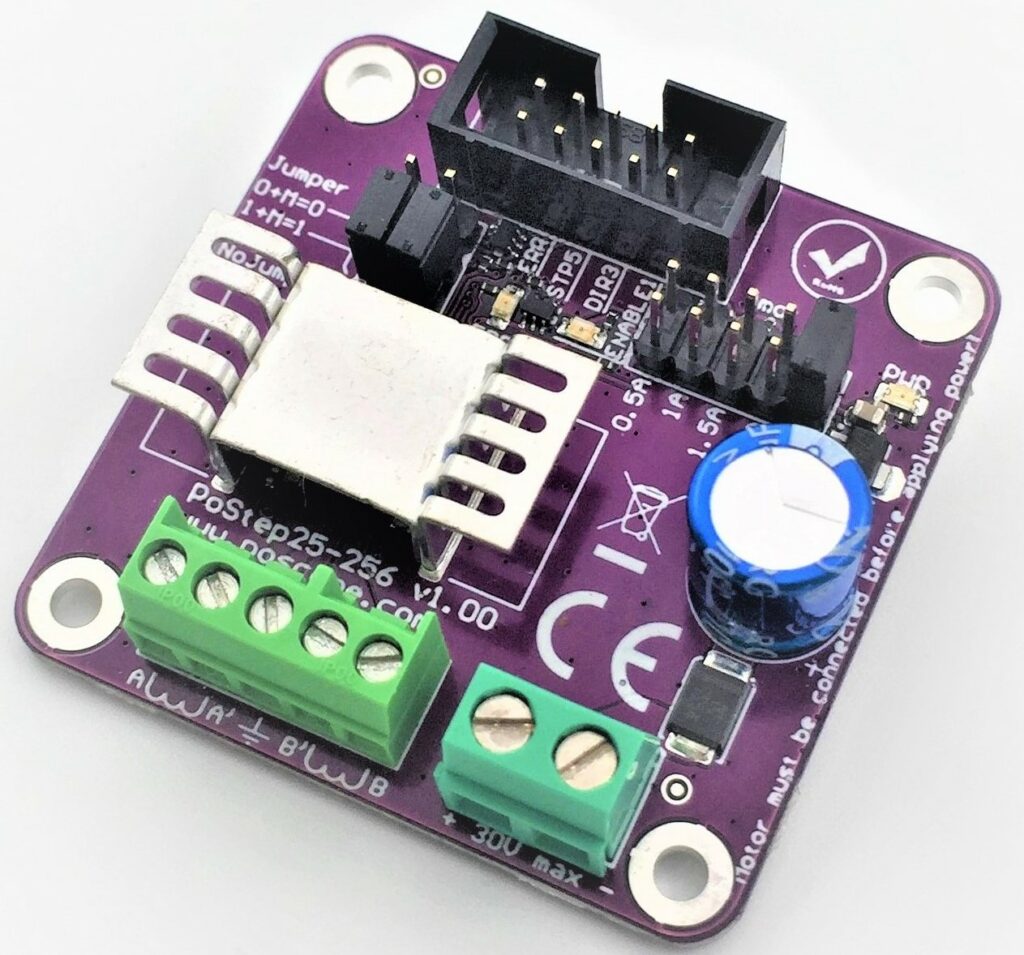
Stepper motor drivers are indispensable components in precision motion control systems, converting digital pulses into precise rotational movements. Understanding their inner workings is essential for optimizing performance in various applications, from 3D printers to CNC machines.
Fundamental Principles of Stepper Motor Drivers
A stepper motor driver serves two primary functions:
- Pulse Generation: It generates sequences of digital pulses that dictate the rotation steps of the stepper motor.
- Current Regulation: It regulates the current flowing through the stepper motor windings, ensuring smooth and controlled movement.
Components of a Stepper Motor Driver
Key components include:
- Microcontroller: Controls pulse generation and timing.
- Power Transistors: Amplify current to drive stepper motor coils.
- Current Regulation Circuitry: Maintains optimal current levels for torque and efficiency.
Operating Modes: Full Step vs. Microstepping
- Full Step: Moves the motor by one full step per pulse, offering high torque but coarse resolution.
- Microstepping: Divides each full step into smaller microsteps, providing smoother motion and higher resolution. This mode reduces vibration and noise, crucial for precision applications.
Control Signals and Interfaces
Stepper motor drivers commonly interface with controllers like Arduino or Raspberry Pi via:
- Step (Pulse) Input: Receives pulse signals to move the motor.
- Direction Input: Determines the motor’s rotation direction.
- Enable Input: Enables or disables motor operation.
Applications in Robotics and Automation
From robotic arms to camera gimbals, stepper motor drivers provide precise control over rotational movements, essential for achieving accurate positioning and smooth operation.
Stepper motor drivers are integral to modern automation and robotics, offering precise control and scalability across a wide range of applications. Understanding their operational principles—from pulse generation to microstepping—empowers engineers and hobbyists to optimize performance and integrate these devices effectively. Next, we’ll explore the nuances of microstepping and its impact on stepper motor performance.
Microstep Stepper Motor Drivers
In the realm of stepper motor technology, microstepping represents a significant advancement that enhances precision, reduces noise, and improves overall performance compared to traditional full-step operation. Understanding microstepping and its implementation in stepper motor drivers is crucial for achieving smoother motion and finer control in various applications.
What is Microstepping?
Microstepping is a technique that divides each full step of a stepper motor into smaller increments, or microsteps. Unlike full-step operation, which moves the motor from one full step to the next, microstepping allows for smoother motion by energizing the motor coils in a sequence that creates intermediary positions between full steps.
Advantages of Microstepping
- Reduced Vibration and Noise: Microstepping minimizes mechanical resonance and vibration, resulting in quieter operation, which is beneficial in applications requiring low noise levels.
- Improved Resolution: By subdividing each full step into smaller microsteps, microstepping increases the motor’s angular resolution. This finer granularity enables more precise positioning and smoother motion profiles.
- Enhanced Torque and Smoothness: While torque per microstep is typically lower than in full-step mode, the overall operation is smoother and more fluid, especially at low speeds.
Implementation in Stepper Motor Drivers
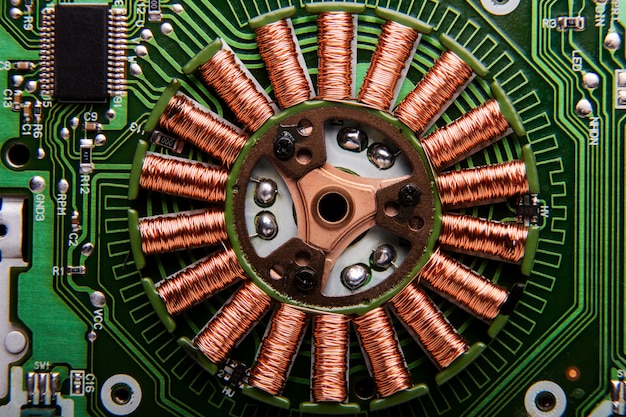
Microstepping is implemented through sophisticated control algorithms within stepper motor drivers. These drivers generate precise current waveforms that energize the motor coils in incremental steps, dictated by the microstepping resolution settings.
Microstepping Resolution Options
Common microstepping resolutions include:
- Half-step (1/2 microstep): Each full step is divided into two microsteps.
- Quarter-step (1/4 microstep): Each full step is divided into four microsteps.
- Eighth-step (1/8 microstep): Each full step is divided into eight microsteps, and so on.
The choice of microstepping resolution depends on the application’s requirements for precision, smoothness, and torque.
Applications of Microstepping
Microstepping finds applications in:
- 3D Printers and CNC Machines: Improving print quality and machining precision.
- Camera and Telescope Mounts: Enabling smooth and precise tracking movements.
- Medical Equipment: Ensuring accurate positioning in diagnostic instruments.
Microstepping is a transformative technology in stepper motor control, offering enhanced precision, reduced noise, and smoother operation compared to traditional full-step methods. By understanding microstepping and its integration in stepper motor drivers, engineers and enthusiasts can leverage these advancements to optimize performance across a wide range of applications. Next, we’ll explore the integration of Modbus protocol with stepper motor drivers, highlighting its significance in industrial automation and communication protocols.
Stepper Motor Driver with Modbus Integration
In industrial automation and large-scale control systems, communication protocols like Modbus play a crucial role in enabling seamless interaction between devices. Integrating Modbus protocol with stepper motor drivers enhances flexibility, monitoring capabilities, and interoperability within complex automation environments.
Understanding Modbus Protocol
Modbus is a widely used serial communication protocol originally developed for industrial applications. It facilitates communication between devices connected over various types of networks, such as RS-485, Ethernet, or TCP/IP. Modbus supports master-slave architecture, where a master device (such as a PLC or computer) communicates with one or more slave devices (such as stepper motor drivers).
Benefits of Modbus Integration with Stepper Motor Drivers
- Centralized Control: Modbus allows centralized control and monitoring of multiple stepper motor drivers from a single master device. This centralized approach simplifies system management and diagnostics.
- Real-Time Data Exchange: Enables real-time data exchange between stepper motor drivers and other devices in the automation network, facilitating synchronized operation and data logging.
- Interoperability: Modbus is vendor-neutral, ensuring compatibility between devices from different manufacturers. This interoperability is crucial for integrating diverse components in complex automation systems.
Implementation Steps
Integrating Modbus with stepper motor drivers typically involves:
- Hardware Setup: Connect the Modbus-compatible interface module (RS-485, Ethernet, etc.) to the stepper motor driver.
- Configuration: Configure the Modbus communication parameters (such as baud rate, parity, and addressing) on both the master and slave devices.
- Programming: Develop or configure Modbus communication protocols in the master device software (e.g., PLC programming software or custom application) to interact with the stepper motor driver.
Practical Applications
- Factory Automation: Coordinate movements of multiple stepper motor-driven actuators or conveyors.
- Process Control Systems: Implement precise positioning and synchronization tasks in industrial machinery.
- Building Management Systems: Control HVAC systems or lighting automation using stepper motor-driven valves or actuators.
Integrating Modbus protocol with stepper motor drivers enhances system flexibility, scalability, and interoperability in industrial automation settings. By leveraging Modbus communication, engineers can streamline control, monitoring, and data exchange processes, contributing to efficient and reliable operation of complex automation systems. Understanding these integration principles empowers engineers to design robust automation solutions tailored to specific application requirements.
Having explored Raspberry Pi relay integration, the fundamental workings of stepper motor drivers, microstepping technology, and Modbus integration, you now have a comprehensive overview of key aspects in stepper motor control systems. Each topic contributes uniquely to enhancing precision, control, and adaptability in both DIY projects and industrial applications.
Conclusion: Navigating the World of Stepper Motor Drivers
Stepper motor drivers stand at the intersection of precision engineering, automation, and digital control, playing a pivotal role in diverse applications ranging from DIY projects to sophisticated industrial systems. Throughout this article, we’ve explored essential aspects of stepper motor drivers, from their integration with Raspberry Pi relays to the intricacies of microstepping and the benefits of Modbus protocol integration.
Key Takeaways
- Versatility and Control: Integrating stepper motor drivers with Raspberry Pi relays offers flexible control options, ideal for both hobbyist projects and industrial automation.
- Fundamental Mechanics: Understanding how stepper motor drivers generate pulses and regulate current is fundamental to optimizing performance and efficiency in motion control systems.
- Enhanced Precision with Microstepping: Microstepping technology provides finer resolution and smoother operation, reducing noise and improving accuracy in applications such as 3D printing and CNC machining.
- Scalability and Interoperability: Modbus integration expands the capabilities of stepper motor drivers by enabling centralized control, real-time data exchange, and interoperability within complex automation networks.
Future Directions
As technology advances, stepper motor drivers continue to evolve, integrating more sophisticated features like advanced control algorithms and communication protocols. Engineers and enthusiasts alike are encouraged to explore these advancements to push the boundaries of what’s possible in automation and robotics.
Final Thoughts
Whether you’re embarking on a new DIY project or optimizing industrial processes, understanding stepper motor drivers and their associated technologies empowers you to innovate and achieve precise, reliable motion control. By leveraging the insights gained from this article, you are well-equipped to harness the capabilities of stepper motor drivers for your next endeavor, ensuring efficiency, accuracy, and seamless integration in your applications.
Keep exploring, experimenting, and pushing the limits of what stepper motor drivers can achieve in your projects and industries. Happy innovating!