
In the world of CNC machines, precision and efficiency rely heavily on the quality of your wiring and control systems. Whether you’re a seasoned machinist or a hobbyist, understanding the key components of your CNC setup is essential. This article will walk you through four critical aspects of CNC control: Ethernet I/O controllers, PoKeys57CNC pinout, Mach3 limit switches, and CNC wiring. Each of these elements plays a vital role in ensuring your machine operates smoothly, accurately, and safely.
Ethernet I/O controllers serve as the bridge between your CNC machine and computer, allowing for high-speed communication and precise control. Next, we’ll explore the PoKeys57CNC pinout, which is pivotal in mapping out how your controller interfaces with motors, sensors, and other hardware. We’ll also delve into Mach3 limit switches, essential for protecting your machine and preventing over-travel during operation. Finally, the importance of correct CNC wiring can’t be overstated—poor wiring can lead to malfunctions or even damage.
Let’s dive deeper into each of these topics to provide you with the information you need to optimize your CNC setup. Whether you’re building a new machine or troubleshooting an existing one, these insights will help you make informed decisions.
Ethernet I/O Controller: Enhancing CNC Communication and Control
An Ethernet I/O controller is a key component in modern CNC systems, providing a fast and reliable communication channel between your computer and the machine. Unlike traditional USB or parallel port connections, Ethernet-based controllers offer increased data transfer speeds and reduced latency, which is crucial for CNC operations that require precise timing and control. These controllers facilitate the input and output (I/O) processes by enabling seamless data flow between the CNC machine and various external devices such as sensors, motors, and control panels.
One of the primary advantages of using an Ethernet I/O controller is its ability to manage complex tasks in real time. Whether you’re controlling multiple motors or interfacing with feedback systems like encoders, this controller ensures that commands are executed with precision and speed. Ethernet-based systems also provide better signal integrity over longer distances, reducing the risk of data loss or signal interference, which can lead to errors during CNC operation.
Moreover, Ethernet I/O controllers are scalable, meaning they can easily be integrated into a larger network. This makes them an excellent choice for industrial applications where multiple CNC machines may need to be managed remotely from a central hub. Additionally, the use of Ethernet allows for easy configuration and updates via software, ensuring that your system can adapt to new requirements or technologies without requiring major hardware changes.
In conclusion, the Ethernet I/O controller is an essential part of any CNC system, offering superior communication capabilities, real-time control, and scalability. For those looking to improve the efficiency and accuracy of their CNC operations, upgrading to an Ethernet-based controller is a highly recommended step.
PoKeys57CNC Pinout: Understanding CNC Connections
The PoKeys57CNC pinout is a crucial element when setting up or configuring your CNC system, as it defines the connections between the controller and the machine’s components. The PoKeys57CNC is a versatile motion controller that supports a wide range of I/O options, making it ideal for hobbyists and professionals alike. Understanding its pinout is essential for properly wiring your CNC machine and ensuring all components, such as stepper motors, limit switches, and sensors, function as intended.
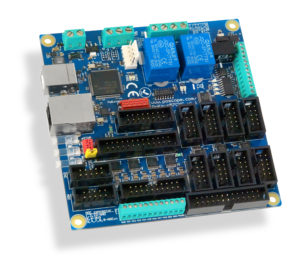
At its core, the PoKeys57CNC pinout offers a clear map of the available pins for different functions. Each pin on the controller serves a specific purpose—whether it’s sending signals to motors, receiving feedback from encoders, or interfacing with external devices. For instance, the pinout includes dedicated pins for step and direction signals that control the movement of stepper motors, as well as input pins for emergency stops and limit switches. Getting familiar with this pinout will help you avoid common wiring mistakes that could lead to erratic machine behavior or even hardware damage.
One of the key benefits of the PoKeys57CNC pinout is its flexibility. The controller supports both digital and analog inputs, which means you can connect a variety of sensors and peripherals. Furthermore, it’s compatible with numerous CNC software packages, including Mach3 and Mach4, making it a versatile solution for different setups. Whether you’re connecting drivers, spindle relays, or probes, the PoKeys57CNC pinout allows for precise and organized connections.
In summary, a thorough understanding of the PoKeys57CNC pinout is essential for anyone looking to configure a CNC system with this powerful controller. Properly interpreting the pinout ensures smooth communication between your CNC hardware and software, leading to more reliable and accurate machine performance.
Mach3 Limit Switch: Ensuring CNC Safety and Precision
A Mach3 limit switch is an essential safety feature in CNC machines, responsible for protecting the system from over-travel and potential damage. Limit switches work by detecting the physical boundaries of the machine’s axes and sending a signal to the controller (in this case, Mach3 software) to stop motion when these boundaries are reached. These small but crucial devices help maintain precision, prevent machine crashes, and safeguard your CNC components.
In a typical setup, Mach3 limit switches are installed on each axis of the CNC machine—X, Y, and Z. These switches are usually placed at both ends of the travel range for each axis, creating a “safe zone” where the machine can operate. When the machine approaches the end of its travel, the limit switch is triggered, immediately sending a signal to the Mach3 software to halt any further movement. This prevents the tool or machine parts from exceeding the mechanical limits, which could lead to physical damage or alignment issues.
Beyond safety, limit switches also play a role in homing operations, where the machine moves to a reference position to ensure accurate starting points for cutting or machining processes. With the Mach3 limit switch system in place, users can ensure that the machine returns to a precise home position every time, increasing the accuracy and repeatability of operations. This is especially important for complex machining tasks where even minor misalignments can result in costly errors.
Installing and configuring Mach3 limit switches correctly is critical to their effectiveness. Mach3 software allows for easy integration of these switches, enabling users to fine-tune settings like debounce, which prevents false triggers due to electrical noise. In conclusion, Mach3 limit switches provide essential safety, protect valuable equipment, and enhance the overall precision of CNC operations.
CNC Wiring: The Backbone of a Reliable CNC System
Proper CNC wiring is the foundation of any efficient and stable CNC machine. Whether you’re building a new machine or upgrading an existing one, ensuring that the wiring is well-planned and executed is crucial for reliable performance. CNC systems are complex and involve numerous components, including motors, controllers, sensors, limit switches, and power supplies. Each of these elements relies on precise and secure wiring connections to function correctly and communicate with one another.

One of the most important aspects of CNC wiring is organization and labeling. With the sheer number of wires involved in a CNC setup, things can quickly become confusing if cables are not clearly marked and routed neatly. Well-organized wiring makes it easier to troubleshoot issues, replace components, or make upgrades. Grouping similar wires (e.g., stepper motor control lines, power supply lines) and using cable management tools such as zip ties and wire ducts can greatly improve the clarity of the system. This also helps prevent interference, where electrical noise from power lines could disrupt signal wires, leading to performance issues.
Choosing the right type of wiring is equally important for the reliability of your CNC machine. For high-current connections, such as those leading to motors or power supplies, you’ll need thicker gauge wires that can handle the load without overheating. On the other hand, signal lines, such as those used for limit switches and sensors, typically require shielded cables to prevent noise interference. Poor wiring practices—such as using inappropriate wire types, improper grounding, or loose connections—can result in erratic machine behavior, such as missed steps, inaccurate readings, or even hardware failure.
In conclusion, CNC wiring is a critical element that directly impacts the performance, safety, and longevity of your CNC system. Proper planning, high-quality materials, and meticulous execution of wiring ensure that your machine operates smoothly and that troubleshooting future problems becomes significantly easier. Taking the time to invest in good wiring practices will pay off in long-term reliability and precision.
Mastering Key Components for CNC Success
In the world of CNC machining, understanding and optimizing your system’s components is essential for smooth and accurate performance. From the high-speed communication provided by the Ethernet I/O controller to the precise connections outlined in the PoKeys57CNC pinout, each part plays a crucial role in ensuring your machine functions effectively. Adding Mach3 limit switches to safeguard your machine and prevent over-travel enhances both safety and accuracy. Finally, attention to detail in CNC wiring ensures the reliability and longevity of your setup.
By mastering these elements, you can significantly improve the functionality and efficiency of your CNC machine. Each of these components, from communication controllers to wiring practices, works together to form the backbone of a high-performing CNC system. Whether you are building a new machine or optimizing an existing one, a strong understanding of these key areas will help you achieve consistent, precise results.
Read also: